Teachers Value the Cultural, Social & Intellectual Funds Students Bring to School
Without students the role of teaching is all but nothing. It is, then, incredibly important that teaching happens in dialogue with students. That teahcer make use of what their students bring with them to class, their social, cultural, and intellectual funds. These are influenced by what they have already learned, how, and where they were raised, and what they are interested in among many others. Using these knowledges, teachers can greatly enhance their lessons, and also work to better engage students, and make them feel welcomed in the classroom.
Intro Form
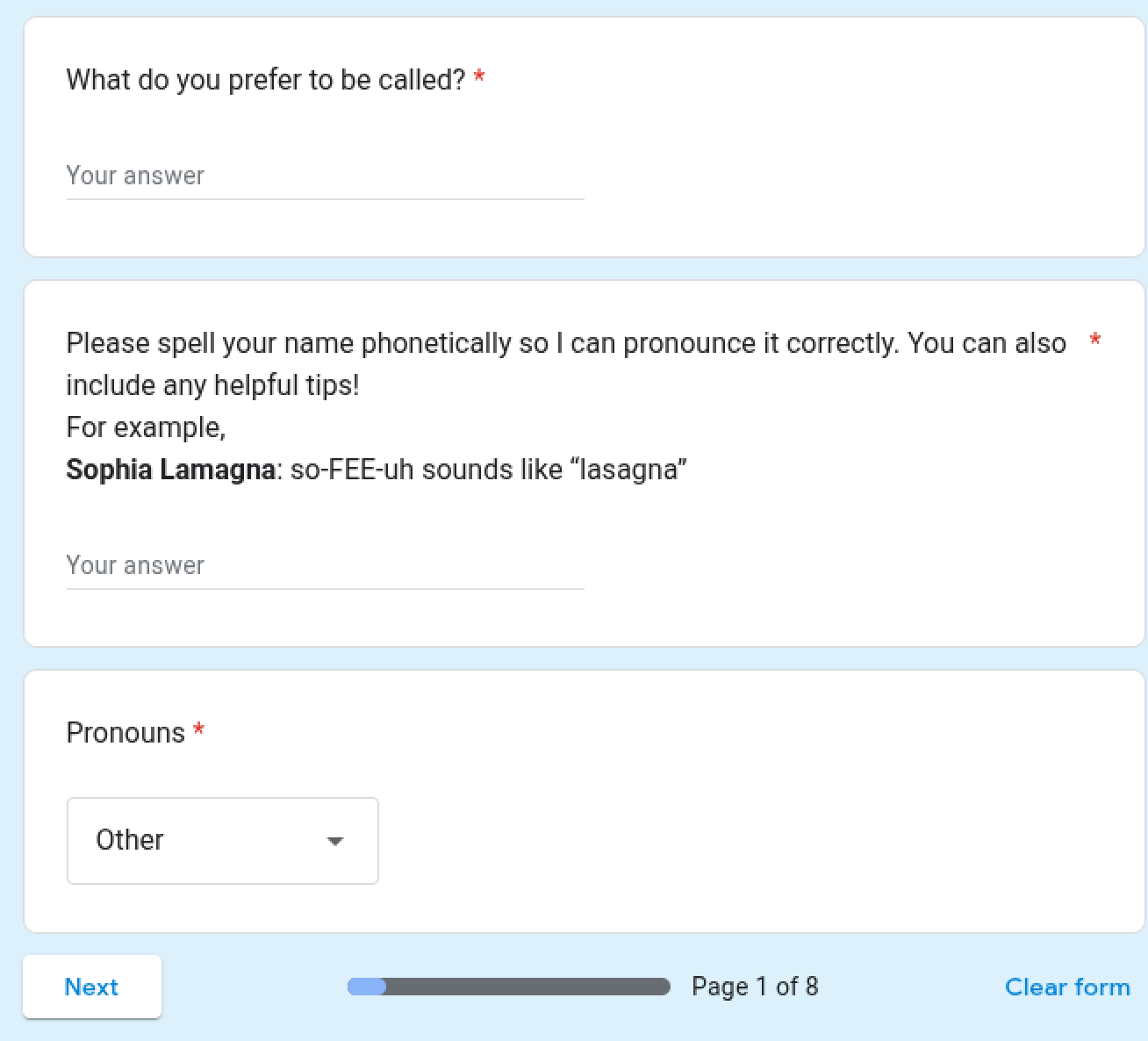
At the very beginning of the year one of the first thing we had students do was fill out an introduction survey to help us get to know them quicker. In doing so I learned so so much about my students so quickly. It was incredibly enjoyable then, getting to ask students about what they said in their survey. I was also surprised to see how much my students and I had in common! Even down to playing the same game on their phone that I played when I was their age. Getting to talk to students about important aspects of their life, or just things they find fun and interesting made building relations with the students very easy. I could relate to them on many levels, and we could talk offhandedly with them made it much easier to encourage their participation in class.
Not to mention too, that all this data they are supplying me with helps me know which topics to cover in more depth. I had many students who said they were interested in the battles of World War I and II, and it was very fun when we got to those wars and learned about the battles. Many other students explicitly told me they don’t like war, so we also made sure to spend time on the culture and home front.
Guardian Interaction
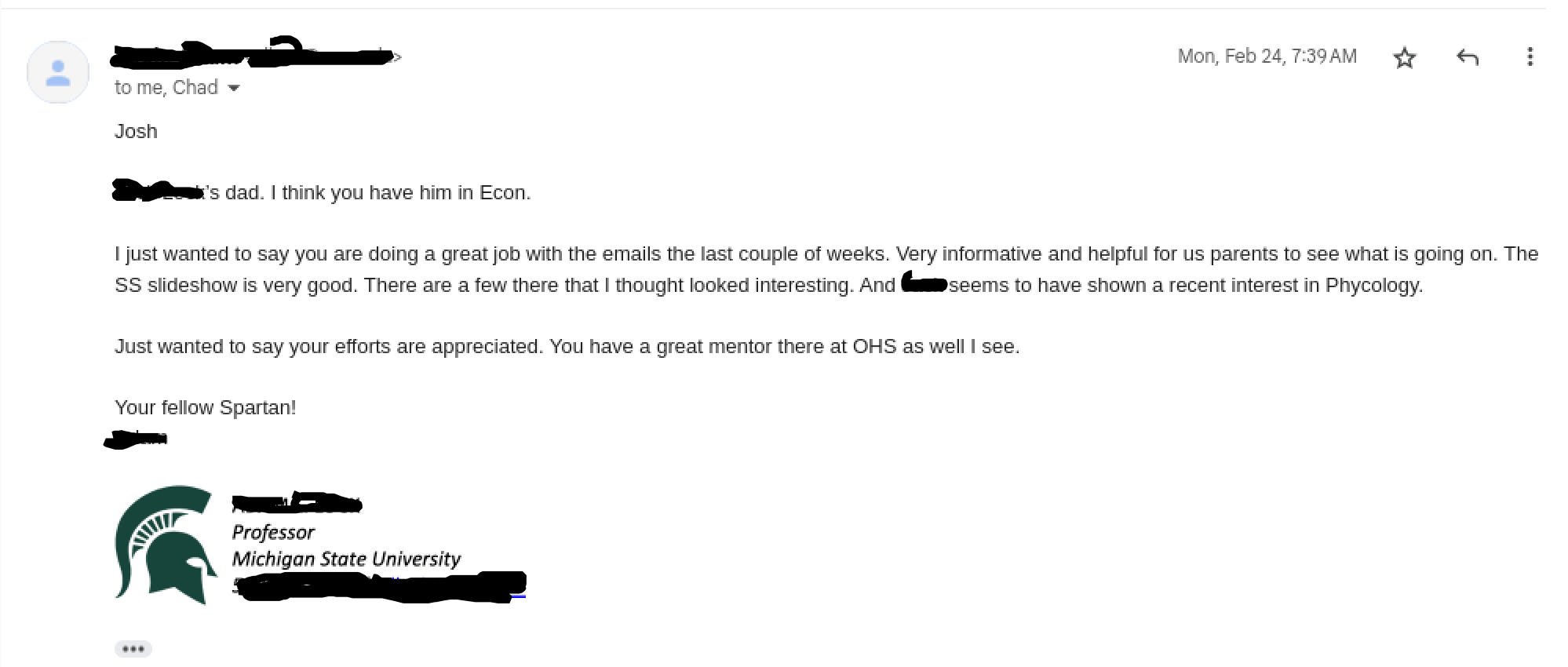
A big social cultural aspect that students bring with them to school (unknowingly or otherwise) is their relation to their guardian! One initiative I was happy to take over was sending weekly update emails to parents. Keeping them in the loop on what we were doing helped them feel on top of their child’s education, and allowed them to work in to the curriculum. At parent teacher conferences we heard from many parents who were grateful to be on the email list. Parents can make sure their students are on top of things, while also being able to easily contact me if they have any questions. Learning information from parents that I can then use to increase student engagement was incredible to see with students who don’t regularly talk very engaged in the work because it was something they know from their parents. One of my students was very into the cold war, so when we got to the cold war it was awesome having them share some stories about the cold war they learned from their parents or otherwise. When students share like that, and they are passionate about it its contagious and their classmates want to hear more.