Student Centered Curriculum
Curriculum must be designed in a way that both supports student learning, and at the same time engages students with the work. It is very easy to create a history curriculum that is unegaging, and just moves through the history. Strong hsitory curriculum is designed in a way to grow on what students already know, and build up with new information. This information should be focused towards students in a way that encourages them to be present and engage.
On Ramps
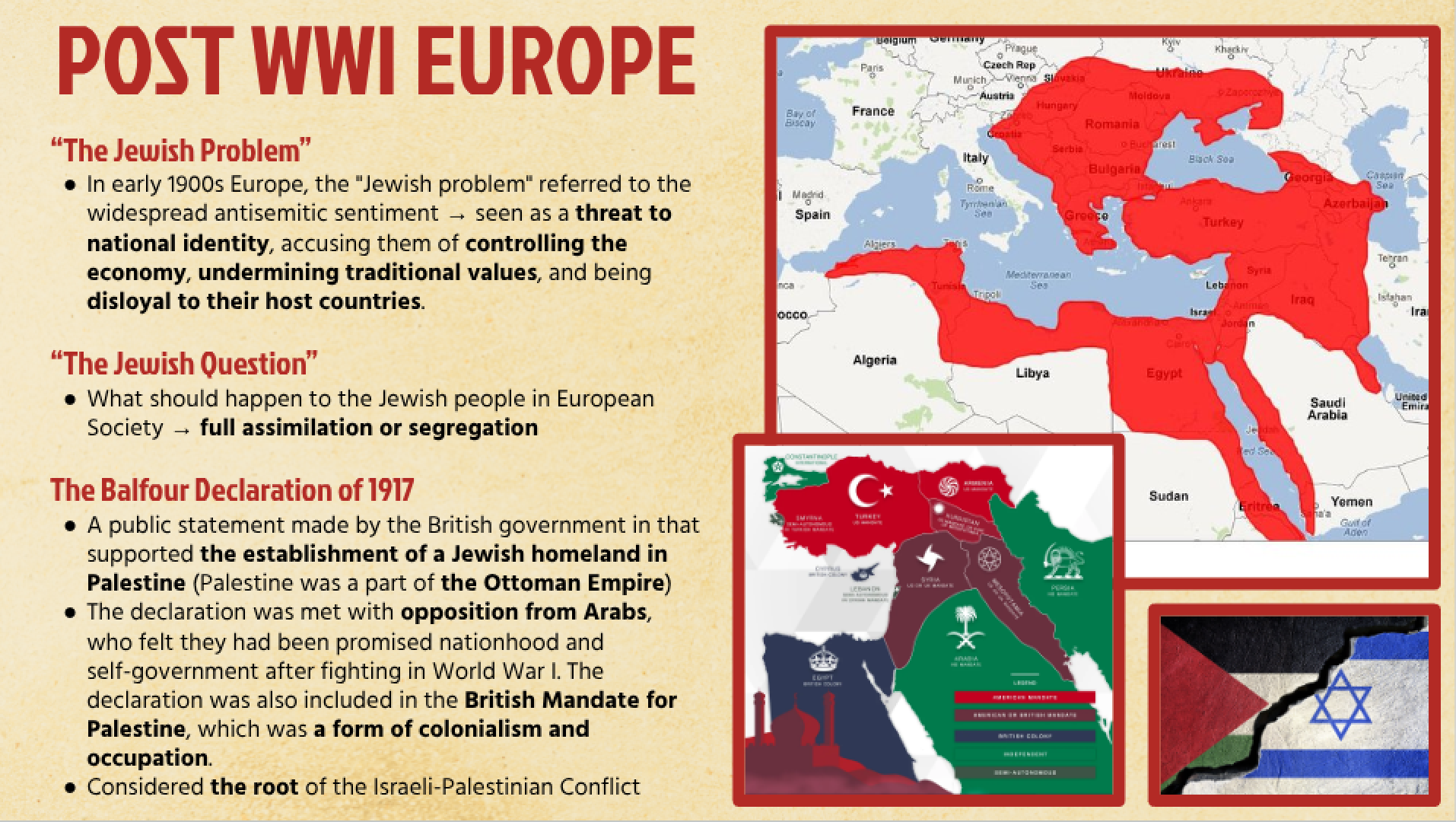
American history covers a large range of topics, which only continues to grow. In covering these topics, especially those about discrimination and prejudice it was important that they understood that these issues are themselves rooted in history. Whenever we could throughout our brief view of history, we pushed to introduce the issues as early as possible. This was done to cover two main aspects. History doesn’t just sprout out of thin air, it is built upon that which came before. While many history classes cover these histories, what is especially important is to make this explicitly clear to students. Not only does this better equip students to understand complex topics, but also drives their curiosity. In teaching on ramps, we essentially teach students to ask why. The glorious thing about history (especially USAmerican history) is that there is a rough answer to any question, and asking questions is a great way to learn something! Many topics were introduced to students in this manner, explicitly explaining that these topics will come up again, helps prepare students to tackle big issues, and unpack new topics. On ramps, as we called these lesson’s were used to introduce a range of ideas from the global buildup towards world war one, to the wide ranging antisemitism that eventually became the Holocaust.
KWL
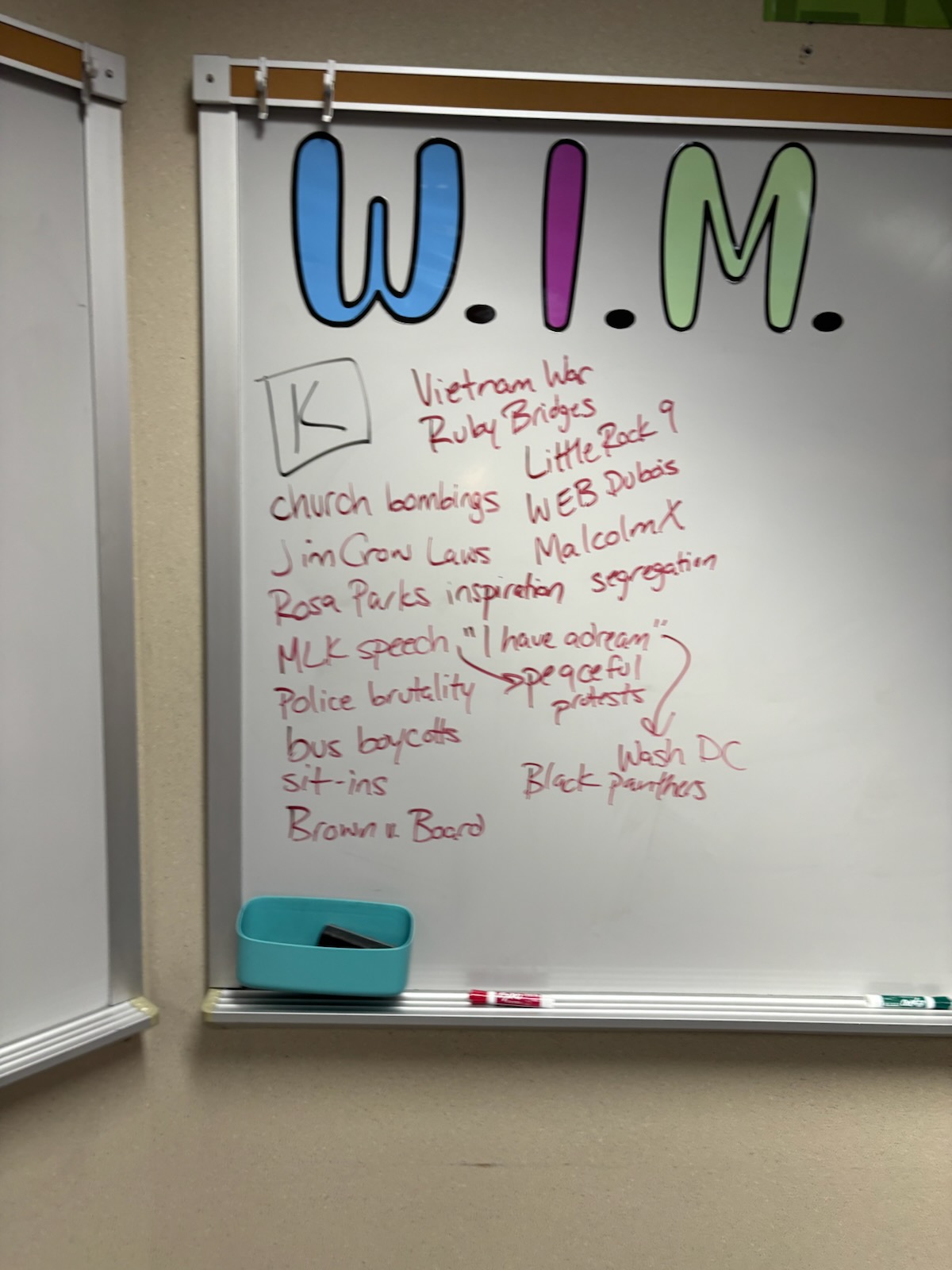
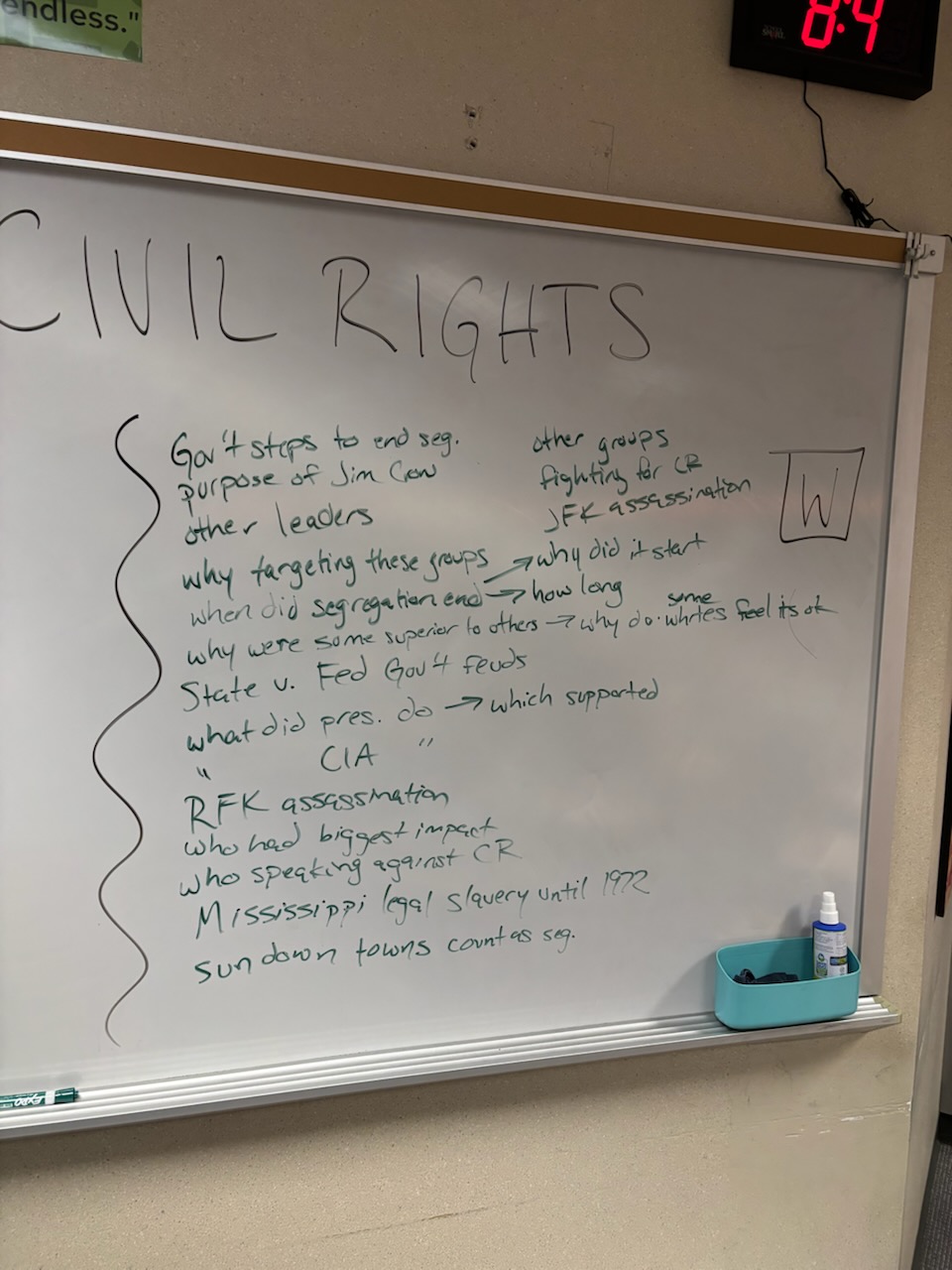
Unfortunately for everyone US History is a survey course. Because of this, of course we have to move pretty quickly from unit to unit. We have started to use KWL’s to help get students ready for a new unit, but also to inform us about any topics that students may want extra information on. The artifact I have chosen to include is a KWL that we worked on as a class for our Civil Rights unit. Though as seen in the picture since we completed it at the beginning it is more of a KW, but the L is sure to come when appropriate. I was incredibly impressed not just by what students knew about the Civil Rights movement, but truthfully even more surprised by what they knew of but wanted to learn. All of the hours mentioned multiple times that they wanted to know more about who was involved in the movement, and we were very happy to oblige them covering as many figures as we could in the little time we had. I was also surprised by how focused the students were whenever we began covering a new figure. Of course it is exactly what they wanted to see so I shouldn’t be too surprised.
Introducing the war in Ukraine
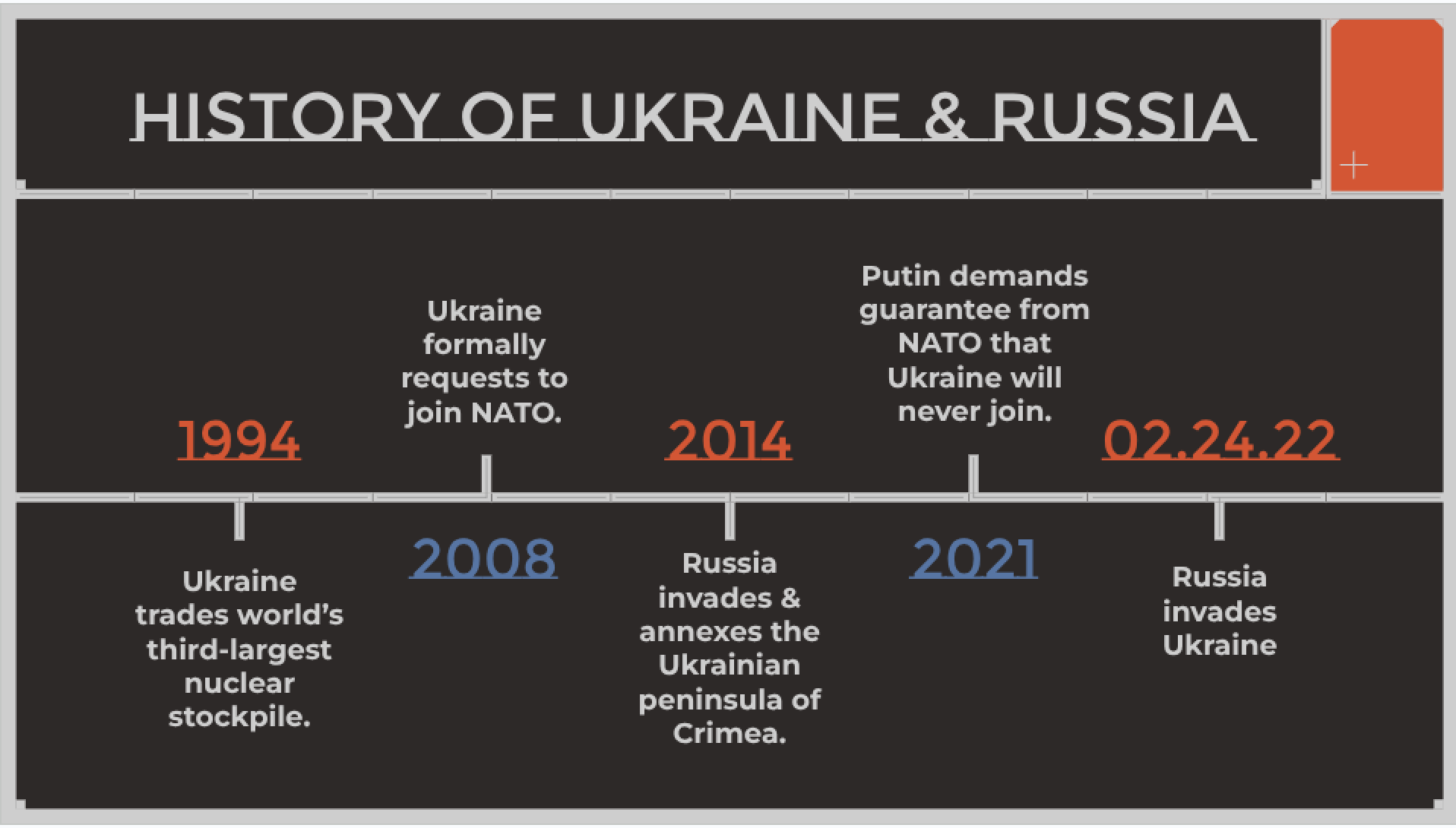
Though our class was USAmerican history, when possible, my mentor teacher and I still found ways to include, and introduce our students into the global affairs, both historically, and presently. Historically, global issues obviously play a large role into American history. Presently, the issues that our world faces did not spawn out of thin air. They are also rooted in history. A very real conflict happening in the world right now is of course the Russian-Ukrainian War. The conflict going on between the two countries has deep roots in history. So in feeding two birds with one scone we were able to give our students both an introduction into the war and broader conflict that has been going on for centuries. We had students work through a timeline of events between Ukraine and Russia. From their initial founding, to their collaboration with the USSR, and finally to Ukraine requesting to join NATO and the breakout of the war. In doing this students get a grasp of the roots of the conflict, and have a stronger understanding of the USSR as we moved through the cold war. This sets the ground layer for students deeper understanding of the conflict and war as they progress through their career/life.